

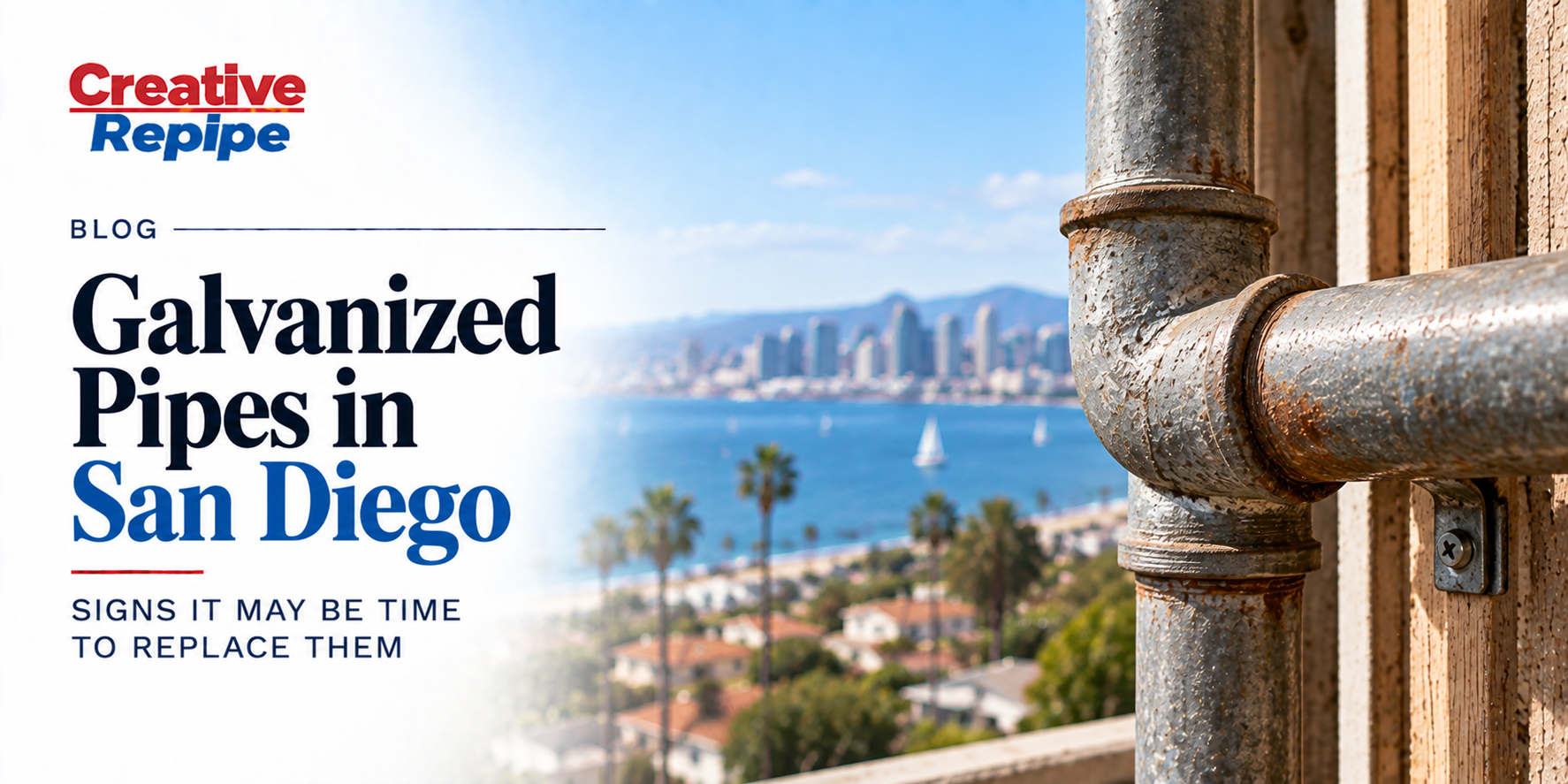
Galvanized Pipes in San Diego: Signs It May Be Time to Replace Them
Galvanized pipes in San Diego were standard in homes built before the 1960s. If your home still has them, they’re likely near the end of their service life. As the repipe specialist behind this blog, we walk through a lot of these older systems. That includes neighborhoods like Point Loma, La Jolla, and North Park. The signs they’re failing tend to show up the same way, home after home.
What Galvanized Pipe Actually Is
Galvanized pipe is steel pipe coated in zinc to resist rust. It was the standard water supply material in homes built before copper, and later PEX, took over. The zinc coating was never permanent. It was designed to wear away over decades. Once it does, the steel underneath starts corroding from the inside out.
Why Galvanized Pipes Fail From the Inside Out
As the zinc coating wears down, rust and mineral deposits build up on the interior pipe wall. That buildup does two things at once. It narrows the space water can flow through, and it eventually eats through the pipe entirely. A galvanized system doesn’t fail all at once. Instead, it fails gradually. First comes pressure loss and discolored water. Then come leaks, wherever the corrosion gets furthest along first.
San Diego’s older coastal neighborhoods are the most likely to still have original galvanized plumbing. So are inland communities built before the 1960s. If yours does, it’s worth knowing what to look for before a section fails on its own schedule.
Signs Your San Diego Home’s Galvanized Pipes May Need to Be Replaced
Galvanized pipe corrosion tends to announce itself the same way in most homes. Watch for:
- Rust-colored or brownish water, especially when you first turn on a tap
- Water pressure that’s dropped gradually over months or years, not suddenly
- Visible rust or flaking on any exposed pipe, often in the garage or under sinks
- A metallic taste or smell from tap water
- Frequent leaks in different spots, rather than one recurring trouble area
- A home built before the 1960s with plumbing that’s never been replaced
One of these alone might not mean much. A few together, however, are a strong sign. The pipe itself may be reaching the end of its life, not just one section.
Repair the Section, or Replace the System?
A galvanized pipe that’s leaking or badly corroded in one spot can technically be patched. Or it can be replaced section by section. But the same zinc breakdown is usually happening throughout the rest of the system too. It’s moving at roughly the same pace. Patching one section buys time. It doesn’t stop the next section from reaching the same point.
That’s why we typically recommend a whole-home repipe once galvanized pipe starts showing real signs of failure. Chasing leaks section by section just delays the same outcome.
Why We Recommend PEX Over Replacing Galvanized With Galvanized
We install 100% American-made copper or PEX. PEX is what we recommend to most homeowners replacing galvanized plumbing. It doesn’t corrode the way galvanized steel does. It’s also rated for 100+ years of service. Fewer joints mean fewer future leak points too. We’ll walk you through whether PEX or copper makes more sense for your home during the free estimate.
What a Repipe With Us Actually Involves
A repipe with Creative Repipe includes more than swapping out pipe. We handle the drywall patching and texturing that comes with accessing the plumbing. We also pull the permits and schedule the inspections the city requires. Most homes are completed in a single day. Every repipe is backed by our Lifetime Warranty. Financing is available if you’d rather not pay the full cost upfront. You never have to leave your home during the work either. We shut off water in sections as we go. Then we turn it back on by the end of every work day.
We confirm pricing in person, since layout, age, and current pipe condition all factor in. Most whole-home repipes run $6,000 to $14,000.
Creative Repipe is a whole-home repipe specialist serving San Diego and the rest of California. We beat any written quote and back every repipe with a Lifetime Transferable Warranty. Most homes run $6,000–$14,000 for a full repipe, done in a single day for most homes.
Deciding between a repair and a full repipe? Our guide on pinhole leaks in San Diego covers a related warning sign. Comparing repipe companies? Our full guide to what to look for covers the checklist point by point. Curious about the Orange County version of this issue? Our guide on galvanized pipes in Orange County covers the same signs.
Schedule Your Free Evaluation
We come to your home and walk the whole system. Then we give you a straight answer and a firm price, usually within 48 hours of your request. No pressure, no vague promises — just a clear picture of what your home actually needs.
Frequently Asked Questions
How do I know if I have galvanized pipes?
Galvanized pipe is dull gray steel, often with visible threading at the joints. It’s also magnetic — a magnet will stick to it, unlike copper or PEX. Homes built before the 1960s are the most likely to still have it.
What are the signs galvanized pipes need to be replaced?
The clearest signs are rust-colored water, gradually dropping pressure, visible corrosion, and frequent leaks in different spots. A few of these together usually mean the whole system is reaching the end of its life. Not just one section.
How long do galvanized pipes last?
Most galvanized plumbing is rated for 40 to 50 years. Homes built before the 1960s are well past that mark. Once the zinc coating wears through, corrosion accelerates from the inside out.
Can you replace galvanized pipes with PEX?
Yes, and it’s what we recommend to most homeowners. PEX resists the corrosion that causes galvanized pipe to fail. It’s also rated for 100 years of service.
How much does it cost to replace galvanized pipes in San Diego?
Most whole-home repipes run $6,000 to $14,000 with us. The exact price depends on the size of the home and scope of work. We confirm firm pricing after a free in-home estimate.
Can I stay in my home during a repipe?
Yes, always. We shut off water in sections as we work. Then we turn it back on by the end of each work day. You’re never without water overnight, and you never need to leave your home.
0 Comments
Trackbacks/Pingbacks