

Does Your California Home Have Kitec Piping? Here Is What You Need to Know Before It Fails
If you purchased a California home built between 1995 and 2007, there is a chance your plumbing system contains Kitec piping — and if it does, this is one of the most important things you will read about your home.
Kitec was marketed as a modern, flexible alternative to copper. It was installed in hundreds of thousands of homes across North America during that period. However, it was eventually discovered that Kitec fails from the inside — and the failure pattern is unpredictable, accelerating, and costly. At Creative Repipe, we want every California homeowner with Kitec to understand exactly what they are dealing with before a failure forces the issue.
What Is Kitec Piping?
Kitec is a type of composite piping — an aluminum core sandwiched between layers of plastic, typically using OPEX or PEX as the outer material. It was sold under several brand names including Kitec, PlumbBetter, IPEX AQUA, WarmRite, Plomberie Amélieure, and AmbioComfort.
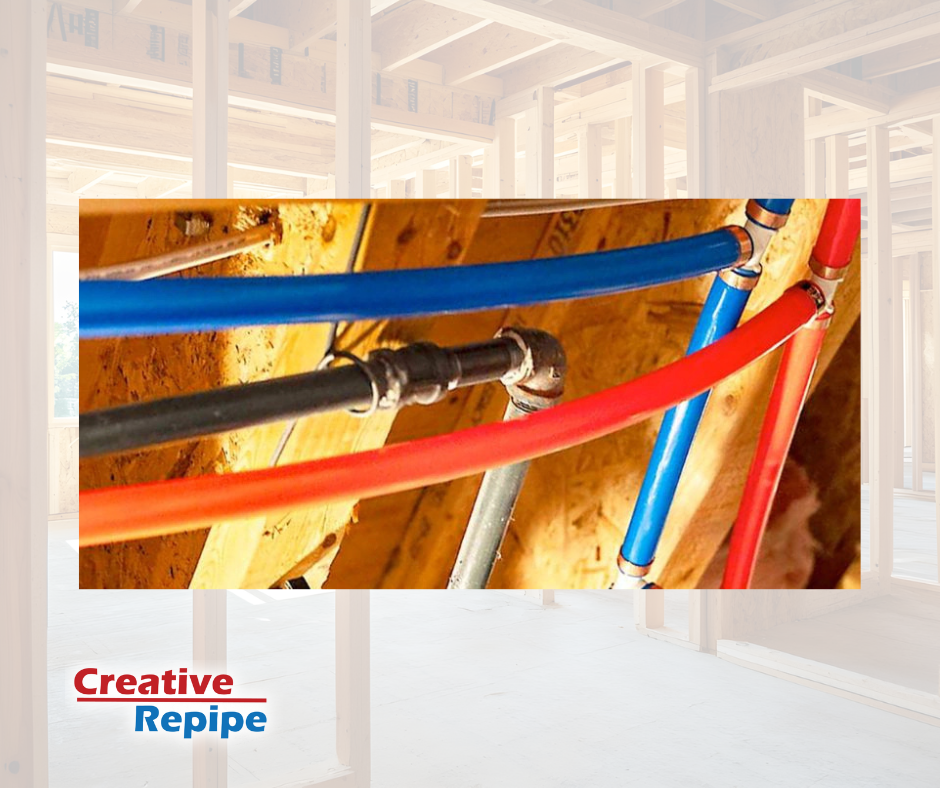
The pipe itself is typically identified by its distinctive orange color for hot water lines and blue color for cold water lines. However, the most significant failure point is not the pipe itself — it is the brass fittings used to connect the system. Those fittings contain high levels of zinc, which react with the water supply over time through a process called dezincification. As a result, the fittings become porous, brittle, and prone to sudden catastrophic failure.
Why Kitec Piping Fails — and Why It Matters in California
The dezincification process that destroys Kitec fittings is accelerated by water chemistry. California’s municipal water — particularly in hard water regions like Orange County, Los Angeles, and the Bay Area — contains mineral content and disinfectant treatment that speeds up this reaction significantly.
Furthermore, Kitec failure is not always gradual. Unlike copper corrosion or galvanized pipe deterioration — which typically produce warning signs like discolored water or reduced pressure before a major failure — Kitec fitting failures can happen suddenly and without warning. A fitting that appears intact one day can fail completely the next, releasing significant water flow inside walls, under slabs, or in utility spaces.
This is why insurance companies, lenders, and home inspectors treat Kitec with particular concern. Additionally, many California insurers have restricted or declined coverage on homes with Kitec piping still in place.
The Class Action Lawsuit and What It Means Today
Kitec was the subject of a major class action lawsuit — similar to the legal action that affected Quest and polybutylene piping. The settlement, which reached approximately $125 million, provided compensation to affected homeowners. However, the settlement deadline has passed for most claimants.
What this means practically is that the legal remedy is largely gone — but the pipe is still in thousands of California homes, still aging, and still failing. The only remaining solution is replacement.
For more on recalled pipe materials and what they mean for California homeowners, read this → Still Got Quest Piping?
How to Identify Kitec Piping in Your Home
Kitec is relatively easy to identify if you know what to look for. Check exposed pipe sections in your garage, utility closet, mechanical room, or under sinks:
- Orange pipe — hot water supply lines
- Blue pipe — cold water supply lines
- Brass fittings — often stamped with “Kitec,” “KTC,” “IPEX,” or “CSA B137.9”
- Flexible construction — Kitec bends more easily than rigid copper
If you find orange and blue flexible piping with brass fittings in your home, we strongly recommend scheduling a free evaluation immediately. Additionally, if you are unsure whether your home has Kitec, our team identifies pipe materials during every free in-home evaluation.
What Kitec Means for Your Home Sale
Like Quest piping and galvanized steel, Kitec is a disclosure item in California. Buyers who discover it during inspection almost always react negatively — and for good reason.
Here is what sellers with Kitec piping typically face:
- Buyers request significant price reductions to cover replacement
- Some buyers walk away entirely rather than assume the risk
- Lenders using FHA or VA financing may decline to approve loans on homes with Kitec
- Some insurers will not renew or issue new policies on homes with Kitec in place
Replacing Kitec before listing removes every one of those obstacles. Furthermore, the Lifetime Transferable Warranty we include with every repipe becomes a documented asset on the disclosure — something buyers, agents, and lenders all recognize as real value.
For more on repiping before a home sale, read this → Should You Repipe Before Selling Your Orange County Home?
What Does Kitec Piping Replacement Cost in California?
For most standard single-family homes in California, a whole-home Kitec replacement with Creative Repipe costs between:
$6,000 to $14,000
That covers complete hot and cold water line replacement, all fittings replaced, all angle stops and supply lines, professional drywall patching, and a Lifetime Transferable Warranty. Most California homes are completed in one to two days.
We provide a firm number after a free in-home evaluation — not a phone estimate. Additionally, if you have already received a quote from another company, we beat any written quote from a licensed competitor.
Get a Free Evaluation — Know What You Are Dealing With
Whether you already know your home has Kitec or you are not sure what type of piping is in your walls — we come to your home, identify the system, and give you a straight answer on condition, risk, and replacement cost. No pressure. No obligation.
Call Creative Repipe at (888) 373-0046 Or CLICK HERE to receive your free estimate.
Frequently Asked Questions
What is Kitec piping and why is it a problem?
Kitec is a composite pipe system installed in homes between 1995 and 2007. Its brass fittings dezincify over time — becoming porous and prone to sudden failure. California’s hard water chemistry accelerates this process, making Kitec homes in the state particularly vulnerable.
How do I know if my home has Kitec piping?
Look for orange and blue flexible piping in your garage, utility room, or under sinks. Brass fittings stamped with “Kitec,” “KTC,” “IPEX,” or “CSA B137.9” confirm the system. Our team identifies pipe materials during every free in-home evaluation.
Is Kitec piping covered by insurance in California?
Many California insurers restrict or decline coverage on homes with Kitec piping. Some will not renew existing policies when Kitec is discovered. Replacing Kitec eliminates those insurance concerns entirely.
How much does Kitec piping replacement cost in California?
For most standard single-family homes, Creative Repipe completes Kitec replacement for $6,000 to $14,000 with a Lifetime Transferable Warranty included. We provide a firm number after a free in-home evaluation.
Can I sell my home if it has Kitec piping?
You can — but you must disclose it. Kitec consistently triggers buyer objections, lender concerns, and insurance complications. Replacing it before listing almost always returns more value than it costs. For the full breakdown, read this → Should You Repipe Before Selling?
Does Creative Repipe replace Kitec piping throughout California?
Yes. We serve Orange County, Los Angeles, San Diego, Sacramento, the Bay Area, and all of California. Call (888) 373-0046 or visit creativerepipe.com to schedule your free evaluation.
0 Comments