

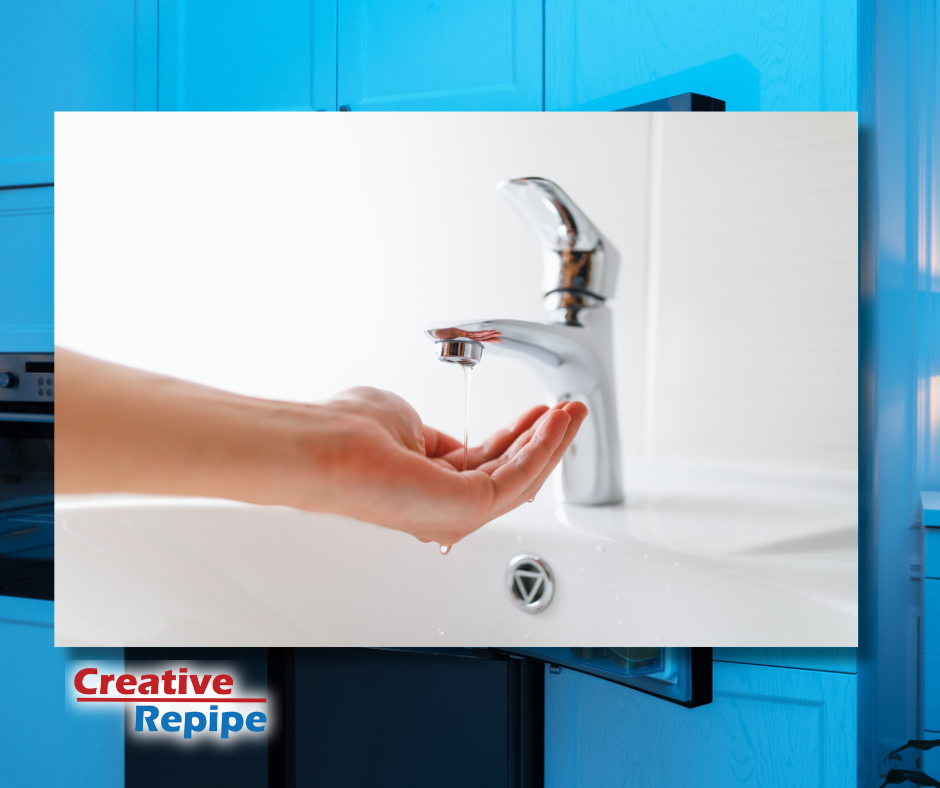
Low Water Pressure in Your Orange County Home? Here Is What Is Really Causing It
If your showers feel weaker than they used to, your faucets take longer to fill a pot, or your dishwasher and washing machine seem to run less efficiently — you have probably wondered what is going on.
Most Orange County homeowners assume the problem is outside their home. However, in the vast majority of cases we see throughout the region, low water pressure is not a city supply issue. It is a pipe issue. And understanding the difference can save you from months of frustration and unnecessary calls to your water district.
Why Orange County Homes Lose Water Pressure Over Time
Water pressure does not drop overnight. Instead, it fades gradually — so gradually that most homeowners do not notice until the problem is already significant.
Here is what is actually happening inside the walls of aging Orange County homes.
Municipal water in Orange County is exceptionally hard. It carries high concentrations of calcium, magnesium, and dissolved minerals that react with the interior walls of copper and galvanized pipes over time. As those minerals build up, they form scale deposits that slowly narrow the interior diameter of the pipe.
Think of it like arterial plaque — the pipe is still there, still functioning, but the passage for water keeps getting smaller. As a result, less water reaches your fixtures at lower pressure, even though the supply pressure from the street remains unchanged.
Furthermore, chloramine — the disinfectant used in municipal water treatment throughout Orange County — reacts with copper pipe walls and accelerates corrosion from the inside. Over years of exposure, corroded pipe walls develop rough interior surfaces that increase flow resistance and reduce pressure further.
The Two Most Common Causes We Find in Orange County Homes
When we evaluate a home for low water pressure, we consistently find one of two root causes — and sometimes both simultaneously.
Mineral scale buildup in aging copper pipes. This is the most common cause in homes built between the 1970s and 1990s throughout cities like Mission Viejo, Laguna Niguel, Lake Forest, and Irvine. Decades of hard water exposure have coated the interior of the pipes with calcium and mineral deposits that restrict flow significantly. Additionally, these deposits create rough pipe surfaces that increase turbulence and further reduce effective pressure at fixtures.
Interior corrosion in galvanized steel pipes. In older homes — particularly those built in the 1960s and early 1970s — galvanized pipe corrosion creates a similar but faster-progressing restriction. As the zinc coating wears away and rust builds up inside the pipe, the effective interior diameter can reduce dramatically. We have opened galvanized pipes in Orange County homes where the interior was more than 70 percent blocked with rust and mineral buildup. The homeowner had low pressure for years without understanding why.
When Low Pressure Is a Warning Sign for Something Bigger
Low water pressure on its own is a quality-of-life issue. However, when it occurs alongside other symptoms, it becomes a warning sign that the pipe system as a whole is failing.
Watch for these combinations:
- Low pressure throughout the home AND rust-colored or metallic-tasting water
- Low pressure AND a recent slab leak or pipe repair
- Low pressure AND a home built before 1990 with original plumbing
- Low pressure AND unexplained increases in water bills
Any one of these combinations tells us the same story — the pipe system is deteriorating, not just aging. Furthermore, a system that has narrowed enough to cause noticeable pressure loss has typically been deteriorating for years. The pressure drop is the symptom. The underlying corrosion is the problem.
For a full checklist of warning signs that point toward a repipe evaluation, read this → Is It Time to Repipe My House?
Why Fixing Low Pressure Requires Fixing the Pipes
Homeowners sometimes ask whether a pressure booster pump can solve the problem. In some situations, a booster pump can temporarily compensate for pressure loss. However, it does not address the restriction inside the pipes — it simply forces more pressure through an already narrowed system.
That approach adds stress to joints and fittings that are already weakened by corrosion. As a result, it can accelerate the failure timeline rather than delay it.
The only permanent solution to pressure loss caused by mineral buildup or corrosion is replacing the pipes themselves. A whole-home repipe removes the restriction entirely — restoring full flow and pressure to every fixture in the home from the day the job is completed.
What a Repipe Does to Your Water Pressure
The difference in water pressure after a repipe is one of the most immediate and noticeable changes homeowners experience. Because we replace every supply line throughout the home with new PEX or copper, the full interior diameter is restored from the main supply all the way to every fixture.
Homeowners who have lived with gradually declining pressure for years often describe the result as feeling like a completely different home. Showers feel stronger. Faucets fill faster. Appliances run more efficiently.
Furthermore, the PEX we install is rated for 100+ years and does not react to Orange County’s hard water chemistry. As a result, the pressure you have on day one of your new system is the pressure you keep for decades.
How Much Does It Cost to Fix Low Water Pressure With a Repipe?
For most standard single-family homes in Orange County, a whole-home repipe with Creative Repipe costs between:
$6,000 to $14,000
That covers complete hot and cold water line replacement, all angle stops and supply lines, professional drywall patching, and a Lifetime Transferable Warranty. Most homes are completed in one to two days.
We provide a firm number after a free in-home evaluation. Additionally, we beat any written quote from a licensed competitor.
For a full breakdown of why repipe quotes vary so dramatically throughout Orange County, read this → Why Orange County Homeowners Are Overpaying for Repipes
Get a Free Evaluation — Find Out What Is Really Happening
If you have been dealing with low water pressure and want a straight answer on what is causing it and what it would cost to fix permanently — we come to your home and give you exactly that.
No pressure. No obligation. Just honest answers and clear pricing before any work begins.
Call Creative Repipe at (888) 373-0046 Or CLICK HERE to receive your free estimate.
Frequently Asked Questions
What causes low water pressure in an Orange County home?
In most cases, low water pressure in Orange County homes is caused by mineral scale buildup or internal corrosion inside aging copper or galvanized pipes. Orange County’s hard municipal water accelerates this process significantly over time.
Can a pressure booster pump fix low water pressure?
A booster pump can temporarily compensate for pressure loss. However, it does not address the pipe restriction causing the problem — and it can add stress to already weakened pipe joints, potentially accelerating failure. The permanent solution is replacing the pipes.
How do I know if my pipes are causing low water pressure?
If pressure has declined gradually throughout your entire home — not just one fixture — and your home was built before 1990 with original plumbing, pipe restriction is the most likely cause. A free in-home evaluation from Creative Repipe confirms the diagnosis immediately.
Will a repipe restore my water pressure?
Yes — in almost every case. Replacing your pipe system removes the mineral buildup and corrosion causing the restriction and restores full flow and pressure to every fixture in the home from day one.
How much does it cost to fix low water pressure with a repipe in Orange County?
For most standard Orange County homes, Creative Repipe completes whole-home repiping for $6,000 to $14,000 with a Lifetime Transferable Warranty included. We provide a firm number after a free in-home evaluation.
How long does a repipe take in Orange County?
Most Orange County homes are completed in one to two days. We restore water at the end of each working day and patch all drywall access points when the job is finished.
0 Comments