

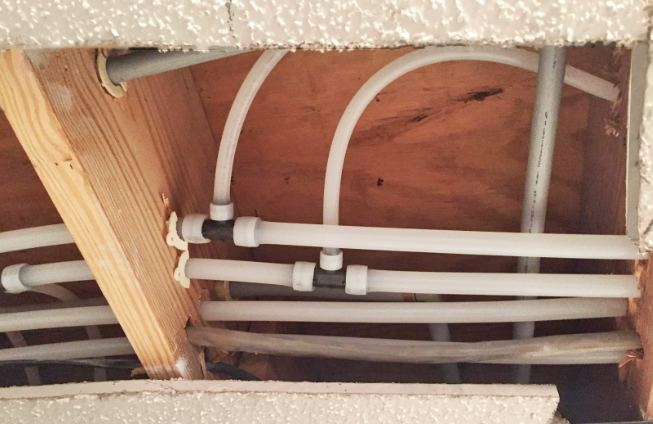
Repiping your home is a major investment—but it’s one that pays off when your plumbing starts to show its age and you will recuperate the investment when you sell your home. Whether you’re dealing with rust-colored water, low pressure, or frequent leaks, replacing the old piping system becomes inevitable.
Homeowners often ask us, “What material should I choose—Copper or PEX?” Both options have their place, but the right one depends on your home, budget, and local climate. Let’s break it down based on real experiences and feedback we’ve received over the years.
What Should You Know About Copper Pipes?
Copper has been a trusted plumbing material for decades, and many older homes were built with copper supply lines. It’s strong, naturally resistant to bacteria, and doesn’t release plastic-related chemicals into your water.
Pros and Cons of Copper Pipes
Pros:
- Copper pipes are known for lasting 30+ years if properly maintained.
- They don’t absorb odors or affect water taste.
- They’re safe and widely accepted by building codes across the U.S.
Cons:
- Installation requires open flame soldering, which adds labor time and cost.
- Copper can corrode if your water is slightly acidic.
- It’s expensive—material and labor costs are significantly higher compared to PEX.
- In colder areas, copper is more prone to bursting if water freezes inside.
💬 We’re often asked: “Why do plumbers not use copper anymore?”
The answer is cost and practicality. While copper is still great, PEX is just easier and more cost-effective for most homes today.
Is PEX a Reliable Replacement for Copper?
PEX (cross-linked polyethylene) tubing came into residential use in the U.S. a few decades ago. Today, it’s the go-to material for repipe projects because of how easy it is to install and its ability to handle pressure and temperature changes.
Pros and Cons of PEX Pipes
Pros:
- It’s flexible and doesn’t require elbows or multiple fittings for every turn.
- PEX-A, in particular, is freeze-resistant and expands under pressure.
- It costs far less than copper and installs faster, saving on labor.
- It’s NSF-certified and safe for drinking water when installed correctly.
Cons:
- PEX can’t be exposed to sunlight and isn’t recommended for outdoor use.
- Some homeowners are still sceptical about plastic piping—even though is approved for potable use.
- In rare cases, rodents have been known to chew through exposed PEX lines.
💬 Homeowners sometimes ask, “Is PEX safe for drinking water?”
Yes. As long as you’re using a certified brand, PEX plumbing meets all safety standards for home use in the U.S.
PEX vs. Copper: Which One Should You Choose?
Let’s take a real-world approach. If you called us to ask what to use in your home, we’d start by asking a few questions:
- Do you live in a region that sees freezing temperatures?
- How accessible are your current pipes (attic, crawlspace, behind drywall)?
- What’s your budget?
Here’s a basic comparison:
Feature | PEX | Copper |
Cost to install | Lower (avg. $4K–$10K) | Higher (avg. $8K–$20K) |
Installation | Quick, no soldering | Slower, requires flame |
Durability | 100+ years | 20-50 years |
Freeze-resistance | High (especially PEX-A) | Low |
Water quality | after the first week it is clean tasting | Neutral, clean-tasting |
Health concerns | NSF-certified = Safe | Naturally safe |
Flexibility | High | None |
Corrosion risk | No | Yes (in some water types) |
💬 “Does PEX leak more than copper?”
This depends on the type of PEX and connection methods used In fact, PEX often has fewer connection points, which means fewer places for leaks to happen.
Is It Worth Replacing Copper Pipes With PEX?
In most homes we work on, the answer is yes.
Especially in older homes where access is difficult and copper is beginning to fail, PEX offers a smart, long-term solution that costs less, installs faster, and holds up extremely well over time. That said, some luxury homeowners still prefer copper for its resale appeal and long track record.
When Should You Consider Repiping?
Here are some signs it may be time:
- You’re experiencing low water pressure
- Water smells metallic or appears discolored
- Frequent pinhole leaks or visible corrosion
- Your plumbing system is over 20 years old
- You’re planning to renovate or sell the home
If any of this sounds familiar, you don’t have to guess—schedule a free inspection with our team. We’ll walk through your options, show you where the problems are, and recommend the best material based on your home.
Ready to Upgrade Your Plumbing?
Whether you’re considering repiping house with PEX or exploring the cost to repipe a house with copper, we’re here to help.
We’ve completed thousands of full-home repipes and we’d be happy to inspect your current system and offer you honest recommendations. No sales pressure—just facts and fair pricing.
📍 Need local assistance?
We serve in California, and we’re rated as one of the best repiping companies in California.
FAQs: What U.S. Homeowners Are Searching For
Do plumbers prefer PEX or copper?
These days, most choose PEX for repipes due to speed, flexibility, and cost.
What is the downside to PEX plumbing?
It’s not UV-resistant, and some still question the long-term data. But when installed by professionals, PEX performs extremely well.
Is it worth replacing copper pipes with PEX?
Yes, especially if your current pipes are leaking, outdated, or corroding. PEX is modern, safe, and affordable.
Why do plumbers not use copper anymore?
Mostly due to cost and labor intensity. Unless specifically requested, copper is rarely the first choice today.
Does PEX leak more than copper?
Not with professional installation. In fact, PEX may leaks less due to fewer joints.
0 Comments