

How Much Water Damage Can a Slab Leak Cause Before You Even Notice?
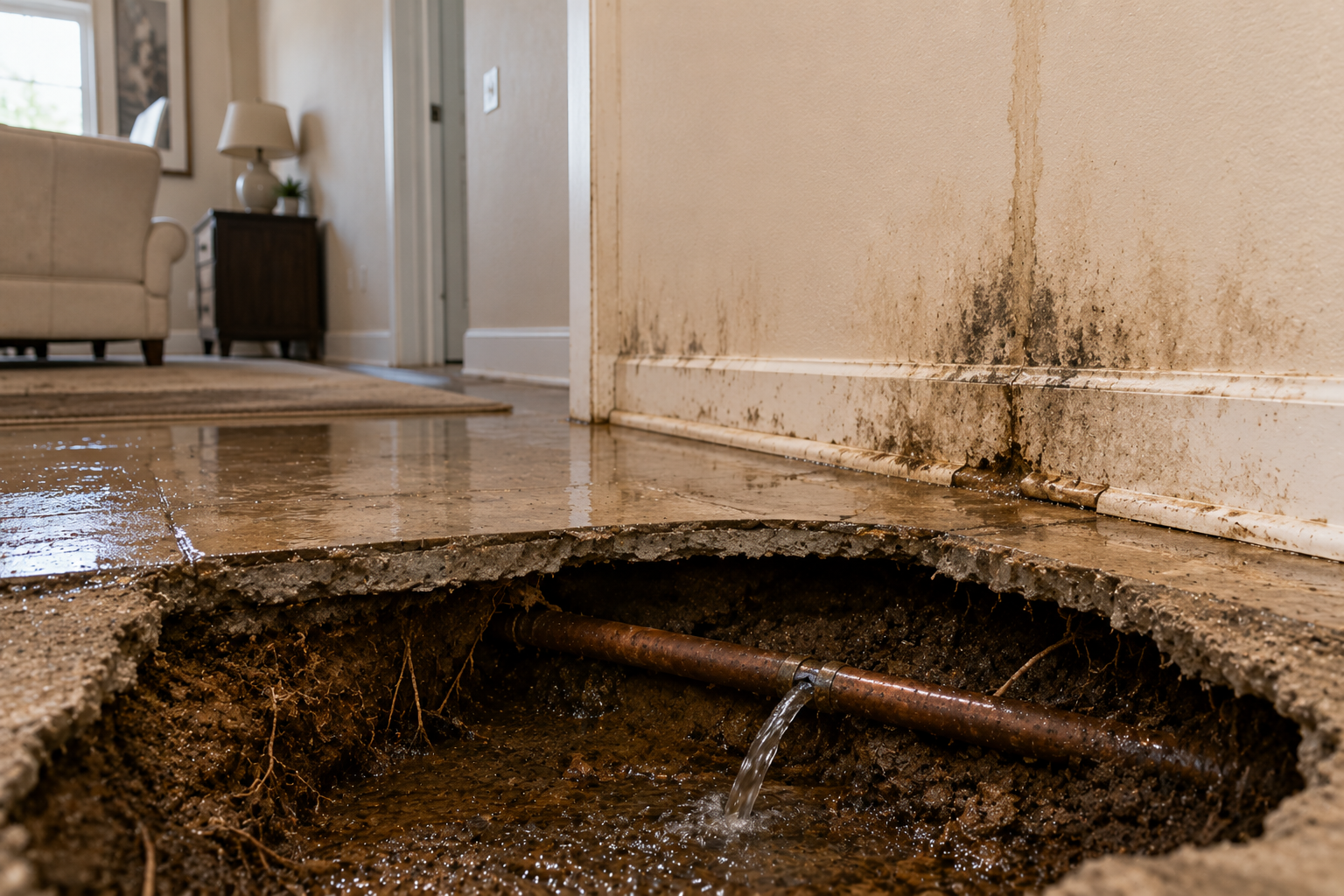
Slab leak water damage rarely announces itself right away. There is no dramatic burst pipe moment. No alarm goes off. Water simply starts moving through your foundation, often for weeks or months before anything visible shows up.
By the time most homeowners notice a sign, the damage has usually been building for a while already. Here is what is actually happening underneath your floor during that quiet period, and why waiting to investigate can cost far more than the leak itself.
How Slab Leak Water Damage Stays Hidden So Long
Your foundation sits below your living space, not inside it. A pipe running through that slab can develop a small crack or pinhole and start releasing water directly into the soil and concrete beneath your home. None of that is visible from where you stand.
Water takes the path of least resistance. It can travel sideways through soil before ever pushing up through a crack in the slab. This means the spot where you eventually notice dampness on your floor may not even be directly above where the leak actually started. A leak under your kitchen can show up as a damp carpet in the hallway weeks later.
What Happens to the Soil and Foundation First
Before water ever reaches your living space, it works on the ground beneath your home. Saturated soil shifts. In some cases, it erodes away from underneath sections of the slab entirely.
This creates the conditions for foundation settling. A slab that loses support in one area can develop small cracks. Those cracks then give water an easier path upward, accelerating the next stage of damage. None of this shows up on a routine glance at your floors. It happens entirely below the surface.
What Happens Once Water Reaches Flooring and Walls
Once water finally pushes up through the slab, the damage accelerates quickly. Carpet and pad absorb moisture and begin developing mold within 24 to 48 hours of sustained dampness. Hardwood floors buckle and warp as they absorb water from below.
Baseboards and drywall wick moisture upward from the floor line. This often creates a faint discoloration line a few inches up the wall, long before anyone notices a puddle. By the time that discoloration is visible, the moisture has typically been present for some time already.
The Hidden Cost of Slab Leak Water Damage
A slab leak repair on its own typically costs between $2,000 and $3,500. That number changes dramatically once water damage enters the picture.
Mold remediation alone commonly runs several thousand dollars, depending on how far moisture traveled and how long it sat. Flooring replacement adds more. Drywall and baseboard repair adds more on top of that. A leak caught early might cost you a repair and a few days of inconvenience. The same leak left unaddressed for months can turn into a project involving multiple contractors and a much larger bill.
For a closer look at how slab leaks tend to repeat once one shows up, read this → Slab Leak Repair Orange County
Early Signs Worth Investigating Right Away
A few signals are worth acting on immediately, before slab leak water damage spreads any further:
- A warm spot on the floor in a home without radiant heating
- The sound of running water when every fixture is off
- A water bill that jumps without an obvious explanation
- A faint, persistent musty smell in one part of the house
- Slight unevenness in flooring that was not there before
Any one of these on its own is worth a phone call. Together, they point strongly toward an active slab leak.
What to Do the Moment You Suspect a Slab Leak
Turn off your home’s main water supply if you can isolate the area, or shut off the main line entirely if you are unsure where the leak is located. Photograph anything unusual you notice, including discoloration, warm spots, or warped flooring, before you touch or clean anything.
From there, call a repipe specialist who can confirm whether the leak is isolated or part of a larger pattern in your plumbing system. We walk through that exact process in detail here → I Have a Leak — Now What?
Why a Repair Alone Sometimes Is Not Enough
Fixing the specific leaking section addresses what already failed. It does not address why it failed in the first place. Most slab leaks in California stem from the same hard water chemistry working on every pipe under your home equally.
That means the pipe that just failed is rarely the only one under stress. A second leak showing up within a year or two is common, often in a different part of the slab. For homes with aging copper plumbing, a full evaluation after even one slab leak is worth the conversation.
What a Repipe Costs After Slab Leak Water Damage
For most standard single-family homes, a whole-home repipe with Creative Repipe runs between $6,000 and $14,000. The final number depends on square footage, number of bathrooms, and material choice. Most homes are completed in one to two days, and every repipe includes a Lifetime Transferable Warranty.
We provide a firm number after a free in-home evaluation, never a phone estimate, and we beat any written quote from a licensed competitor.
Get a Free Evaluation Before the Damage Spreads Further
If you suspect a slab leak, the sooner we look at it, the less it costs to fix in every sense. We assess the leak itself and the broader condition of your plumbing system in the same visit.
Call Creative Repipe at (888) 373-0046 Or CLICK HERE to receive your free estimate.
Frequently Asked Questions
How long can a slab leak run before someone notices?
It varies widely, but weeks to several months is common. Water often travels through soil before surfacing, which delays any visible sign on your floor or walls.
Is a warm spot on my floor always a slab leak?
Not always, but it is one of the most reliable early indicators in a home without radiant floor heating. It is worth investigating rather than dismissing.
Can a slab leak cause mold even if I never see standing water?
Yes. Moisture wicking up through flooring and into baseboards can create the damp conditions mold needs well before any water is visible on the surface.
My water bill jumped but I have not seen any leaks. Could it still be a slab leak?
Yes, this is one of the most common ways people first discover a slab leak. The water is going somewhere even if it has not surfaced yet.
Will homeowners insurance cover the water damage from a slab leak?
Coverage depends on your specific policy and the cause of the leak. We cover this in more detail here → Does Homeowners Insurance Cover Repiping?
Should I repipe the whole house after one slab leak, or just fix that section?
It depends on your pipe material and age. Homes with aging copper plumbing are more likely to see additional leaks later, which makes a full evaluation worth scheduling even after a single repair.
0 Comments